
The best 10 programming books
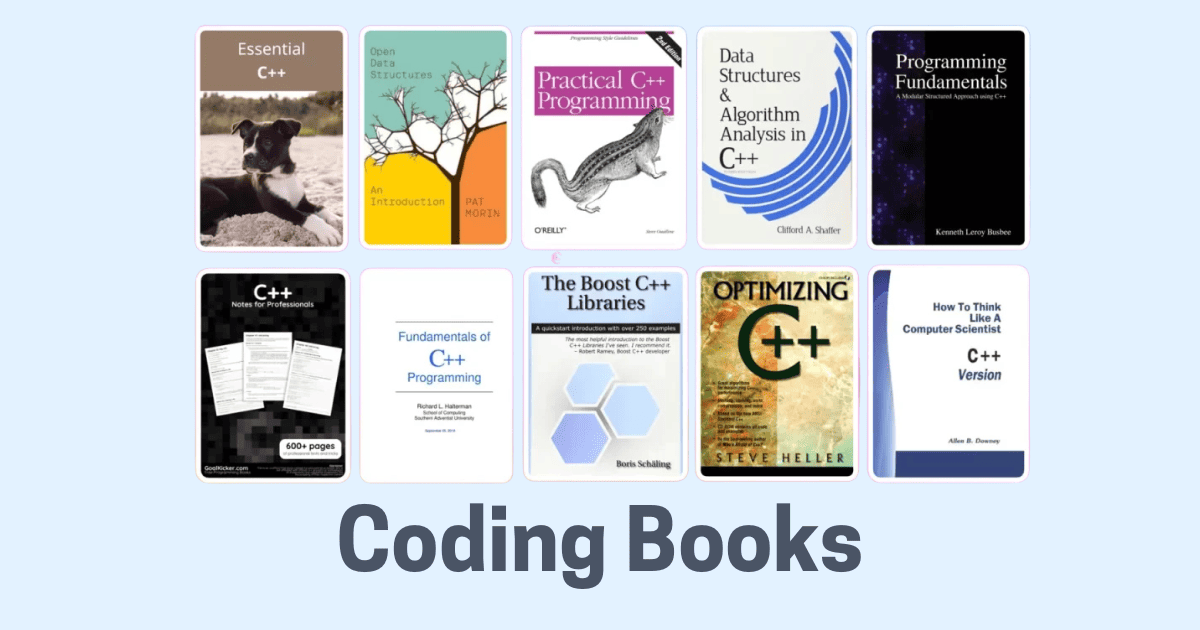
If you're building a library to level up as a programmer — not just to learn syntax but to think like an engineer — the right books are like training partners: they push you, correct your form, and expand what you believe is possible. Below is a curated list of the 10 best programming books that have helped generations of developers. For each title I include what it teaches, who benefits most, concrete takeaways, a suggested way to read it, and small projects/exercises to practice the ideas. Read this the way you read code: actively, with a notebook, and with a willingness to try the patterns in real code.
How I chose these 10
I prioritized books that:
- Teach thinking and engineering, not just language syntax.
- Stand the test of time or explain modern systems deeply.
- Offer practical, repeatable techniques you can use immediately.
- Are accessible to motivated learners but still reward deeper study.
This list mixes fundamentals (algorithms, software design), craftsmanship (clean code, refactoring), architecture (data-intensive systems), and classics that reshape how you think about programming.
1) The Pragmatic Programmer — Andrew Hunt & David Thomas
Why read it: This book is the mental toolkit for a professional developer. It’s less about a single technology and more about habits, patterns, and attitudes that make you effective and adaptable.
Who it's for: Beginners through senior engineers who want to work smarter. Especially good if you’re switching jobs or learning how to think about design, testing, and career-growth.
Key ideas: DRY (Don’t Repeat Yourself), orthogonality, tracer bullets, pragmatic refactoring, automation, and thinking about systems beyond lines of code.
How to read: Treat each chapter/essay as a sprint. Read an essay, summarize it in your own words, then pick one suggestion to practice that week (e.g., set up an automated test for a small module).
Exercises/projects:
- Implement a small CLI tool using tracer-bullet style: scaffold quickly, then iterate.
- Create a personal “craftsman checklist” (code review items you always check).
Why it ages well: It’s about mindset; tools change but professional judgment doesn’t.
2) Clean Code — Robert C. Martin (Uncle Bob)
Why read it: Clean Code offers a concrete philosophy and examples of how to write readable, maintainable code. It’s a workshop: lots of examples of poor code and how to improve it.
Who it's for: Developers who want to produce code teammates actually enjoy working with — especially useful early in your career.
Key ideas: Meaningful names, small functions, single responsibility, readable tests, and the ethic of leaving code better than you found it.
How to read: Keep a real codebase on hand. For each chapter, apply the principles to a file in your project and refactor it.
Exercises/projects:
- Pick a messy routine in your codebase and refactor it according to Clean Code rules.
- Write tests for legacy code before refactoring.
Caveat: Some examples are Java-centric and prescriptive, but the principles generalize across languages.
3) Code Complete — Steve McConnell
Why read it: If Clean Code is about micro-level craft, Code Complete is a broad, research-backed manual of software construction. It covers architecture practices, debugging, design heuristics, and even psychological aspects of coding.
Who it's for: Anyone wanting a deep, evidence-based approach to building software — excellent as a second book after an introduction to coding.
Key ideas: Defensive programming, construction heuristics, iterative design, and the importance of code smells and their remedies.
How to read: Read with a notebook. The book is dense — pick chapters that match your current challenges (estimation, testing, construction).
Exercises/projects:
- Build a checklist from the book for writing and reviewing code.
- Track bug origins in your project for a sprint and see which practices would prevent them.
4) Refactoring: Improving the Design of Existing Code — Martin Fowler
Why read it: Refactoring is both a technique and a discipline. Fowler maps common "code smells" to safe, incremental transformations and shows how to improve design without breaking existing behavior.
Who it's for: Developers working in legacy codebases, teams that need to evolve systems without constant rewrites.
Key ideas: Small, reversible refactorings, the role of tests, and a catalog of patterns like Extract Method, Replace Temp with Query, Move Method, etc.
How to read: Read chapter + do the refactoring on a real method. Use unit tests to assert correctness before and after.
Exercises/projects:
- Pick a 200–400-line file and list code smells; implement a series of small refactorings and measure improvement in readability and testability.
5) Design Patterns: Elements of Reusable Object-Oriented Software — Erich Gamma, Richard Helm, Ralph Johnson, John Vlissides (Gang of Four)
Why read it: This is the canonical catalog of object-oriented design patterns—templates for solving recurring design problems. It’s less prescriptive and more a vocabulary for design.
Who it's for: Intermediate to advanced developers designing libraries or large OO systems.
Key ideas: Creational, structural, and behavioral patterns (Factory, Adapter, Decorator, Strategy, Observer, etc.). Learn when and why to apply each.
How to read: Map each pattern to a real problem you faced. Implement small examples in your language of choice.
Exercises/projects:
- Implement a simple plugin system using the Strategy or Observer pattern.
- Rewrite small portions of your code to use the Adapter or Facade where coupling is high.
Caveat: Modern languages and functional paradigms sometimes replace patterns with simpler constructs — learn the pattern’s intent, not only its class diagrams.
6) Introduction to Algorithms (CLRS) — Thomas H. Cormen, Charles E. Leiserson, Ronald L. Rivest, Clifford Stein
Why read it: This is the academic standard for algorithms and data structures. It explains complexity, correctness proofs, and a wide set of algorithms—foundational for interviews and deep engineering work.
Who it's for: Students, engineers working on performance-critical code, and anyone who wants theoretical rigor.
Key ideas: Sorting, dynamic programming, graph algorithms, amortized analysis, NP-completeness, and algorithmic design techniques.
How to read: Don’t rush. Read chapter, solve exercises, implement algorithms from scratch. CLRS is heavy; use it as a reference and study companion.
Exercises/projects:
- Implement and benchmark different sorting algorithms on real-world-ish data sets.
- Implement Dijkstra and A* and test them on map graphs.
Caveat: Dense and mathematical; if you want intuition first, pair it with a gentler tutorial or visualizer.
7) Structure and Interpretation of Computer Programs (SICP) — Harold Abelson & Gerald Jay Sussman
Why read it: SICP is a philosophical and mathematical approach to computation that will change how you conceptualize programs. It uses Scheme to teach abstraction, interpreters, and language design.
Who it's for: Programmers willing to stretch mentally — excellent for understanding computation fundamentals and language design.
Key ideas: Abstraction, metalinguistic abstraction (interpreters), higher-order functions, and the close relationship between data and computation.
How to read: Work the exercises. The problems are the point. If Scheme is unfamiliar, take the time to learn minimal syntax.
Exercises/projects:
- Build a mini interpreter for a tiny language subset.
- Use higher-order functions to build a small DSL for configuration or transformations.
8) Designing Data-Intensive Applications — Martin Kleppmann
Why read it: A modern masterpiece on how to build reliable, scalable, maintainable data systems. It explains storage engines, replication, consistency models, stream processing, and trade-offs in distributed systems.
Who it's for: Backend engineers, system architects, and anyone designing services that must scale or be fault-tolerant.
Key ideas: Storage engines (B-trees vs LSMs), replication strategies, consensus, distributed transactions, stream processing, and the crucial role of data models.
How to read: Read with a real or imagined system in mind. Map concepts to your architecture (e.g., how would you use a log-structured merge tree?).
Exercises/projects:
- Implement a simple leaderless replication toy or simulate a partition and reason about consistency.
- Model an event sourcing system and attempt to rebuild state from events.
9) You Don’t Know JS (YDKJS) — Kyle Simpson
Why read it: JavaScript is deceptively strange; this multi-volume series digs under the surface to explain scope, closures, types, async behavior, and more. It transforms a JavaScript user into a JavaScript master.
Who it's for: Web developers, full-stack engineers, anyone using JavaScript professionally. Beginners with patience will benefit; intermediate developers will gain critical insights.
Key ideas: The mechanics of JS: lexical scope, this, prototypes, async patterns (callbacks, promises, async/await), and the type system nuances.
How to read: Read volumes in order and code every example. Use the knowledge to refactor confusing JS code you encounter.
Exercises/projects:
- Re-implement small features using multiple async patterns: callbacks, promises, and async/await, to see differences.
- Explore prototype-based inheritance by creating small object systems.
10) Programming Pearls — Jon Bentley
Why read it: A short, brilliant collection of essays focused on problem solving and practical algorithmic thinking. It blends clever tricks and real-world constraints with elegant solutions.
Who it's for: Developers who want to improve problem-solving heuristics and those preparing for algorithmic interviews or constrained programming challenges.
Key ideas: Thinking about trade-offs, developing heuristics for problems, pragmatic data structures, and creative algorithm application.
How to read: Read an essay, then attempt the problems. This book rewards play—try to out-think the examples before reading the solutions.
Exercises/projects:
- Tackle classic problems (bin packing, bit twiddling) and implement multiple approaches, comparing time/memory.
Recommended reading paths
If you’re a beginner (0–1 year):
- The Pragmatic Programmer — mindset and habits.
- Clean Code — practical craft.
- You Don’t Know JS (or Eloquent JavaScript) — if you code on the web.
- Programming Pearls — sharpen problem-solving.
If you want to become a strong backend architect / systems engineer:
- Designing Data-Intensive Applications — core systems thinking.
- Refactoring and Code Complete — maintainability at scale.
- CLRS — algorithms as needed.
- Design Patterns — system structure.
If you want to ace interviews and algorithmic thinking:
- Introduction to Algorithms (CLRS) — rigorous approach.
- Programming Pearls — heuristics and cleverness.
- SICP — deep conceptual understanding (optional but transformative).
How to actually learn from these books
- Active reading beats passive reading. Don’t just highlight — implement. Re-write examples, test them, break them, fix them.
- Small, repeatable projects. After each chapter, implement a tiny project that uses the new idea. A real tweet-sized project beats a thousand mental bookmarks.
- Write a learning log. Each time you finish a chapter, write a short blog post (300–600 words): what the chapter taught and how you’ll use it. This cements knowledge and builds content for your blog.
- Pair reading with code reviews. Apply patterns to peer code and explain suggested changes — teaching is the best test of grasp.
- Use spaced repetition for dense material. For heavy math/algorithms, revisit key concepts after a week and then a month.
- Design experiments, not just exercises. For example, after reading about LSM trees, benchmark SQLite WAL vs RocksDB on a small dataset to see real trade-offs.
Ideas for blog articles (you asked for blog content — here are ideas you can use)
Since you run book-focused blogs, each book above can become multiple posts:
- "10 Lessons I Learned from Clean Code (and how I refactored a 500-line file)"
- "How Designing Data-Intensive Applications changed my approach to data modeling"
- "SICP in 30 minutes: Concepts that changed how I think about programs"
- "From Bad to Great: A refactoring diary based on Refactoring by Martin Fowler"
- Comparative posts: "Pragmatic Programmer vs Code Complete — which to read first?"
For SEO and engagement, include a code snippet, screenshots of before/after refactors, and a short video demo for complex systems explanations. Readers love practical before/after transformations.
Final notes — building the bookshelf
Books are compasses, not maps. They point you toward better engineering, but you still have to walk the path. Start with one book that matches your current pain point (messy code? read Clean Code; scaling issues? read Kleppmann). Read actively, implement aggressively, and blog about what you learn — both for your own retention and to build an audience.